Industry Insights | December 11, 2025
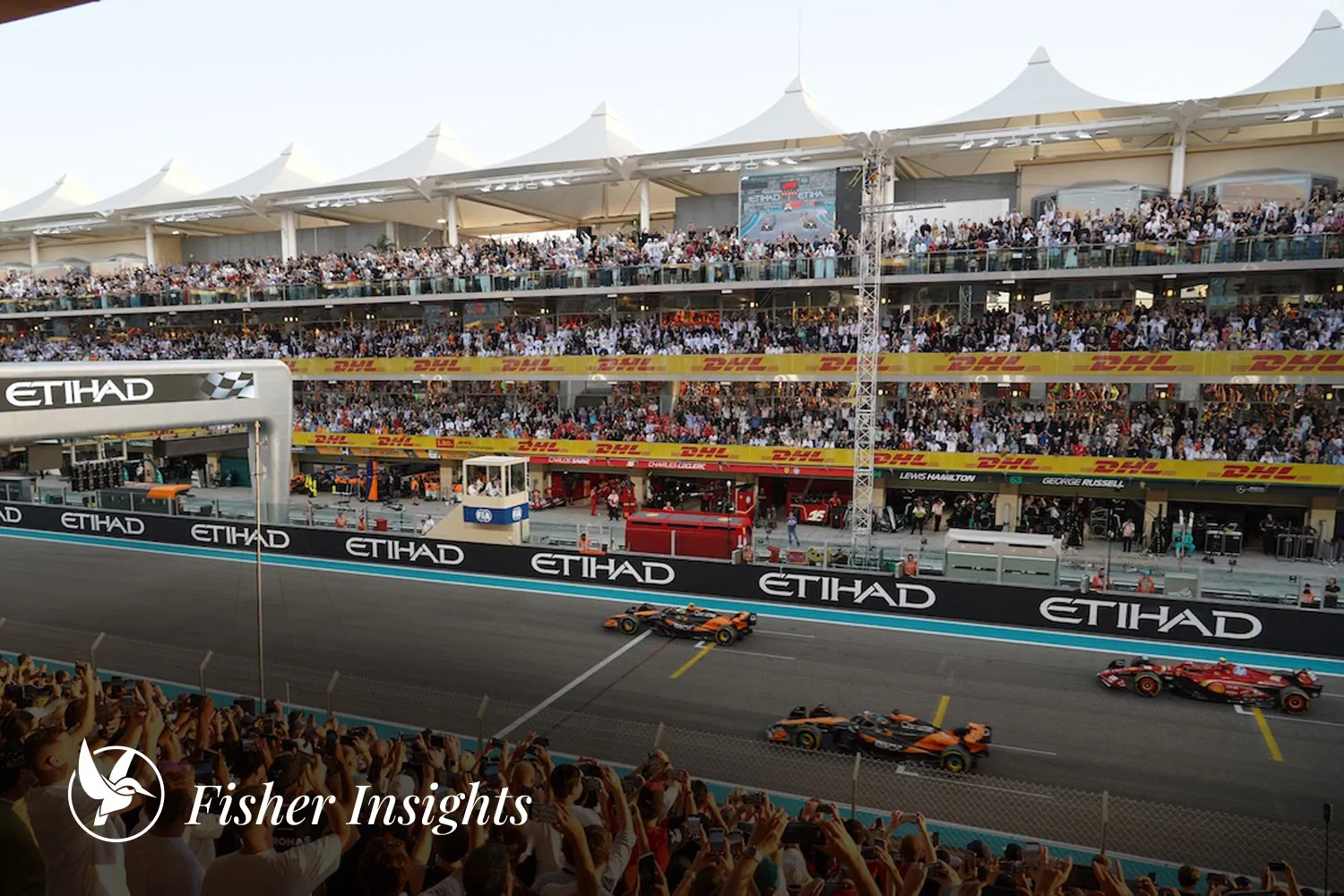
Blink and you’ll miss it—but you simply can’t look away. Engines ignite, cars slice through winding circuits, cameras flash, reporters comment, and the crowd gasps in both awe and admiration as the world watches. This is the Formula 1 Grand Prix in Abu Dhabi—one of 2025’s biggest sporting events, and just one example of the GCC’s expanding roster of global sports spectacles. This is the GCC today: a region that not only celebrates global sport but is rapidly becoming one of its driving forces.
A mere glance at the Abu Dhabi Grand Prix reveals what that truly means. Behind every moment on the track are hundreds of thousands of man-hours—and a vast workforce—bringing the vision to life. The circuits are engineered by specialists in design and construction, the stadiums shaped by architects, planners, and on-site crews, and the events elevated into global spectacles by producers, technicians, camera operators, marketers, security teams, hospitality staff, and countless others whose expertise turn moments like these into reality.
When Two Giants Converge: The Global Sports Boom Meets the GCC
The GCC’s sports sector is a story of two giants. On one hand, the global sports industry has been expanding at an immense rate, driven by rising investments in sports technology, sports tourism, and large-scale live events. On the other hand, the GCC has spent years developing and transforming its own landscape, evolving into a region that actively shapes the future of international sport rather than merely hosting it. Together, these forces are building one of the most dynamic and opportunity-rich sports ecosystems in the world—creating thousands of jobs and unlocking entirely new career pathways across the region.
Saudi Arabia, in particular, is accelerating this regional transformation. According to Khaleej Times (2025), the Kingdom’s sports market is expected to almost triple to reach $22.4 billion by 2030, creating 39,000 new jobs and contributing $13.3 billion to the national GDP. Meanwhile, the GCC is positioning itself as a rising global power in sports tourism, which PwC (2025) projects will surpass $2 trillion by 2030. The broader Middle Eastern sports ecosystem already contributes approximately $600 billion to the economy and is expanding at nearly 9% annually—a surge fueled by a packed calendar of international tournaments, esports competitions, and wellness festivals hosted between 2023 and 2025, supported by major state-backed investment (Sports Tourism News, 2025).
The Jobs Powering the GCC’s Sports Surge
The GCC’s sports revolution isn’t only unfolding on the track or on the field—it is reshaping the region’s entire employment landscape. As the Gulf Research Center notes in its GCC Sport Sector Outlook, the rapid rise in sports events has triggered a surge in demand across transport, food services, real estate, retail, and hospitality. Every major tournament boosts short-term property rentals, fills hotels, and drives revenue across local industries—creating an employment ecosystem that stretches far beyond the stadium walls.
At the same time, new investment channels are opening the door to even more specialized roles. The same report highlights three fast-growing areas: the development and modernization of stadiums and arenas, which require architects, engineers, project managers, and event-operations teams; the expansion of world-class training facilities and sports academies, creating roles for coaches, physiotherapists, sports scientists, and performance analysts; and the rise of sports villages—integrated residential hubs designed for athletes, coaches, and sports professionals—which generate demand for facility managers, community coordinators, fitness specialists, and sports-tech providers. Together, these emerging sectors are diversifying the region’s job market at an unprecedented pace.
Empowering the Workforce That Powers the Game
As the GCC’s sports sector accelerates, Fisher helps organizations build the workforce capable of sustaining it. Our Recruitment Strategy and Workforce Planning solutions give you clarity from the start—through detailed workforce needs analysis, precise role profiling, job description development, and employer branding that attracts the right talent. We then refine your hiring pipeline with rigorous Candidate Selection and Assessment solutions, including skills and behavioral testing, structured interviews, panel evaluations, and cultural fit assessments that ensure you choose professionals who will thrive in your environment.
And because the sports industry evolves rapidly, our Training and Development Programs provide ongoing skill-building workshops and tailored learning pathways designed to elevate performance at every level. With us, every step is executed with precision—helping you recruit, assess, and develop the talent that will power your organization’s future in the region’s booming sports economy.
The GCC’s sports revolution is only just beginning—and the opportunities are limitless for organizations ready to build the right teams. With our tailored HR solutions, your organization is equipped to lead, innovate, and perform at the highest level in this rapidly evolving landscape.
References:
Gulf Research Center. (2025). Game on for the GCC: Turning sporting ambition into lasting tourism impact [PDF]. https://programs.grc.net/wp-content/uploads/2024/09/GCC-Sport-Sector-Outlook_2.pdf
Khaleej Times. (2025). GCC eyes slice of $2 trillion sports tourism market by 2030. https://www.khaleejtimes.com/business/gcc-eyes-slice-of-2-trillion-sports-tourism-market-by-2030
PwC. (2025). Game on for the GCC: Turning sporting ambition into lasting tourism impact. https://www.sportstourismnews.com/gcc-sports-tourism-pwc-growth-opportunities/
Sports Tourism News. (2025). GCC sports tourism: PwC highlights growth opportunities. https://www.sportstourismnews.com/gcc-sports-tourism-pwc-growth-opportunities/