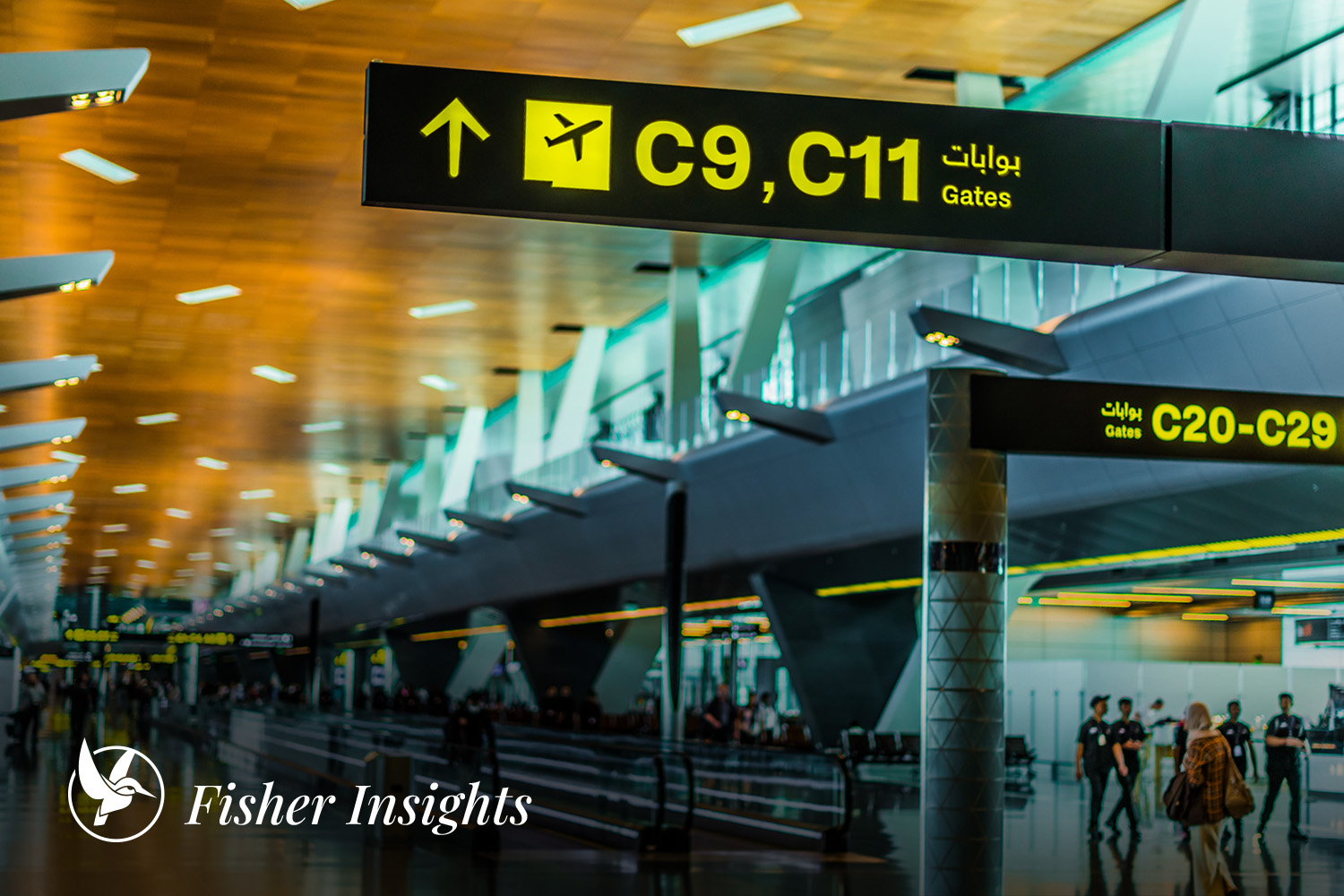
The GCC is rapidly evolving into a global travel powerhouse—one that not only welcome the world but sends its residents across it with ease and confidence. Travel from the region is becoming faster, more flexible, and increasingly driven by opportunity rather than limitation.
Larger airports, policy reform, and increased flight frequency are ushering in a new era of mobility. Rising disposable incomes, simplified visa regimes, and expanding air connectivity are reshaping how Gulf residents explore the world—from spontaneous short-haul escapes to long-haul, experience-led journeys. Outbound tourism from the GCC is no longer defined by constraints, but by choice.
As governments and airlines continue to invest in mobility, the region is emerging not just as a destination in its own right, but as one of the world’s most dynamic outbound travel markets.
The Numbers
The scale of outbound tourism growth across the GCC is becoming increasingly clear. According to Communicate Online (2025), citing data from the IMARC Group, the GCC outbound travel and tourism market is projected to nearly double, from $70.46 billion in 2024 to $138.06 billion by 2033. This growth reflects a compound annual growth rate (CAGR) of 7.1% between 2025 and 2033, underpinned by rising disposable incomes, stronger air connectivity, and evolving travel preferences.
Arabian Business (December 2025) reinforces this trajectory, highlighting the GCC’s strategic geographic position, world-class aviation infrastructure, and increasingly liberal visa regimes as key enablers. Together, these factors are positioning GCC travellers as one of the most valuable and sought-after outbound tourist segments globally—fuelling demand across both short-haul and long-haul destinations.
The Forces Reshaping How the Gulf Travels
Outbound tourism from the GCC is being propelled by a convergence of accessibility, infrastructure, and digital empowerment. Communicate Online (2025) points to the expansion of low-cost carriers from major Gulf hubs as a critical driver, making international travel more affordable and accessible—particularly for younger travellers, middle-income families, and expatriate communities.
Simultaneously, large-scale airport developments have transformed GCC airports into world-class transit hubs. As noted by Arabian Business (December 2025), enhanced route networks, efficient transit facilities, and improved passenger amenities are reducing friction and encouraging more frequent trips.
This momentum is further amplified by digital booking platforms, which allow travellers to compare prices, assess reviews, and book with confidence—shifting power toward consumers while intensifying competition across the travel ecosystem.
Removing Borders, Unlocking Mobility
Policy reform is now accelerating outbound and intra-regional travel. As Arabian Business (November 2025) notes, the approval of a new “one-stop” travel system marks a major shift in how GCC citizens move across the bloc, following its announcement at the 42nd meeting of GCC Ministers of Interior in Kuwait. This initiative enables citizens of the UAE, Saudi Arabia, Qatar, Oman, Kuwait, and Bahrain to complete immigration, security, and customs procedures at a single checkpoint when traveling within the region—significantly reducing travel time and friction.
Further strengthening this momentum is the forthcoming Unified GCC Tourist Visa, outlined by Gulf News (2026). Often compared to Europe’s Schengen model, the initiative represents a pragmatic response to long-standing bureaucratic fragmentation. By replacing multiple national visa processes with a single, predictable framework, the visa promises to enhance mobility for residents and expatriates alike—translating political coordination into tangible economic and tourism gains.
Career Implications
The rapid expansion of outbound tourism is unfolding alongside the broader rise of the tourism sector across the GCC, reinforcing its role as a major engine for employment and skills development. According to Gulf Business (2025), the sector’s contribution to employment reached $4.3 billion in 2024, marking a 24.9% increase compared to 2019. This growth underscores tourism’s increasing importance not just as an economic pillar, but as a sustained source of job creation.
As outbound tourism accelerates, it is reshaping career pathways across aviation, travel technology, destination marketing, and tourism operations. Demand is rising for roles in route planning, customer experience design, digital booking platforms, and data-driven travel analytics as the sector scales in both complexity and reach.
At the same time, policy-led mobility initiatives such as the one-stop travel system and the Unified GCC Tourist Visa are creating new opportunities in public policy, border technology, and regional tourism governance. For professionals across the Gulf, outbound tourism is no longer a peripheral industry; it is emerging as a cross-sector growth engine—opening career opportunities that sit at the intersection of mobility, technology, and regional integration.
Turning Momentum into Workforce Readiness
As the outbound tourism market matures, organizations across the GCC are paying closer attention to how workforce planning underpins long-term sector growth. The ability to anticipate skills demand, build adaptable teams, and respond to changing mobility patterns is becoming a critical enabler of sustainable expansion across tourism, aviation, and mobility. At Fisher, we contribute to this conversation through our work in workforce planning, analytics, and acquiring the right talent in fast-growing sectors.
References
Arabian Business. (2025, November). GCC one-stop travel system approved for UAE, Bahrain and GCC states. https://www.arabianbusiness.com/industries/travel-hospitality/gcc-one-stop-travel-system-uae-bahrain
Arabian Business. (2025, December). GCC outbound tourism market forecast to reach $138bn by 2033. https://www.arabianbusiness.com/industries/travel-hospitality/gcc-outbound-tourism-market-forecast-to-reach-138bn-by-2033
Communicate Online. (2025). GCC outbound tourism market seen reaching $138 billion by 2033: IMARC Group. https://communicateonline.me/news/gcc-outbound-tourism-market-seen-reaching-138-billion-by-2033-imarc-group/
Gulf Business. (2025). GCC tourism sector to reach $371bn by 2034: GCC-Stat. https://gulfbusiness.com/gcc-tourism-sector-to-reach-371bn-by-2034-gccstat/
Gulf News. (2026). The unified GCC visa: Integrating tourism and governing mobility. https://gulfnews.com/opinion/op-eds/the-unified-gcc-visa-integrating-tourism-and-governing-mobility-1.500409696